
Natural Leather Care
A Lederlotta piece is like a part of nature that lives with you. Here you will learn about my materials and how your product stays beautiful for years to come.
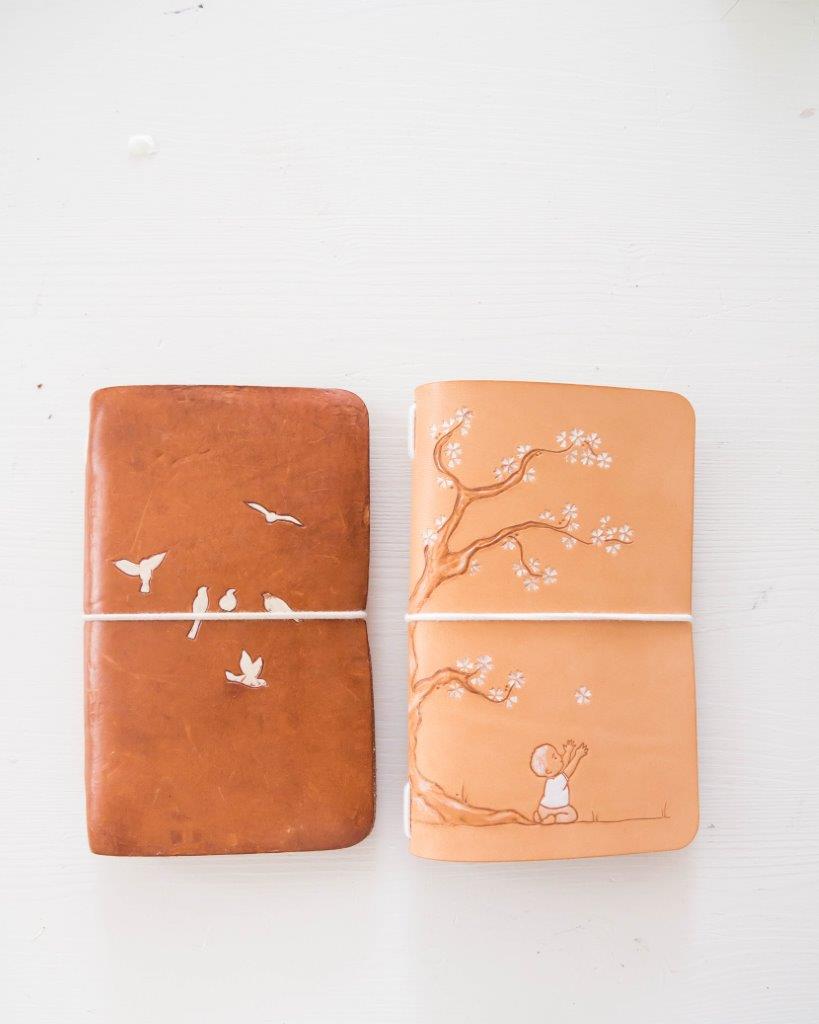
The Magic of Patina: From Light to Honey

Natural leather will react to the sun. Initially, it is often very light, but over time it darkens and takes on a beautiful, honey-colored patina. This change is not a defect, but the ultimate quality sign of vegetable tanned products. Your accessories will develop their own story.
Image 1: From new to normal use, and extreme wear at the bottom
Image 2: A new noteboook cover next to one that is 926 days old.
Daily Leather Care: Less is More
Since I choose all materials consciously, they are free of plastics and harmful substances. This also means: no chemical sealants. The leather finish I use protects against light splashes. However, it’s best to wipe those away immediately.
Dust & Dirt: A soft, slightly damp cloth is usually all you need for cleaning.
Conditioning: If the leather feels dry after years of use, you can apply a natural leather balm (beeswax-based) in a very thin layer.
In the video, you can see how I treat one of my pieces with a leather care heart.
First Aid for Natural Leather
A scratch?
Don't panic! Since it’s natural leather, a light scratch from your fingernail can happen easily. It might look dramatic at first, but it's just as easily fixed. Simply rub the area with your thumb and a bit of pressure. The warmth and natural oils in the leather make the scratch disappear almost like magic, becoming part of the patina.
Caught in the Rain?
If your piece gets soaking wet, it needs patience, not heat. Please do not place the leather on a heater or in direct sunlight to dry! This would make the fibers brittle. Just let it dry slowly at room temperature. Afterwards, it's good to apply fresh leather finish. It's best to wipe away drops immediately; if liquids soak in for a long time, edges may remain visible even after drying, though they fade a little bit over time.
Spotty after adding finish?
In your package, you’ll often find a small leather finish heart as a thank you. Just like in the video: when you condition the leather, it will look darker and perhaps even blotchy at first. This is completely normal! The leather absorbs the finish slowly and brightens up again once it's dry. The spots disappear, leaving behind supple, rich leather. Just be sure to buff it well so no excess remains for lint or fibers to stick to.
Materials at a Glance


Because my products were often misused as ‘teething toys’ by my own children, I stand by my decision: No chemicals. No plastic – and by that, I also mean no acrylic paints or finishes.
Purely vegetable-tanned leather from pasture-raised cattle.
Elastic bands made of natural rubber and organic cotton.
Leather finish made of beeswax, almond oil, and cocoa butter – hand-stirred by me.
Casein paint, the natural alternative based on milk protein.
Details: Wool felt made of organic virgin wool and linen thread with beeswax.
I hope these tips help your leather piece remain a loyal companion for many years to come. Natural leather is patient; it grows more beautiful and gains character with every day you use it.
Do you have a specific question?
If your leather has encountered something not mentioned here, or if you’re unsure: just send me a message! I’m happy to help.
Discover Leather Products
If you’re looking for a matching companion for your unique piece or a gift for a loved one, feel free to browse the shop further.